
Muhammad Najash
- June 3, 2026
- SEO
Backlink Building Strategies for Beginners: How to Get High-Quality SEO Backlinks in 2026
Table of Contents
Key Takeaways
- Backlinks from relevant, authoritative sites are one of Google’s strongest ranking signals.
- High-quality backlinks depend on source relevance, domain authority, and natural anchor text.
- Guest posting, broken link building, and content-based links are the most effective strategies right now.
- Free platforms like Medium, Quora, and LinkedIn let beginners build backlinks without a budget.
- Tracking your backlinks with Google Search Console is essential to measure what is working.
Websites with zero backlinks almost never rank on page one — no matter how good their content is. If you have published posts that Google ignores, weak or missing backlinks are likely the reason. This guide breaks down the exact backlink building strategies you need to move from invisible to ranked, even if you are starting from scratch.
You will learn what backlinks are, why they carry so much weight with Google, how to identify high-quality link opportunities, and how to execute the strategies that are actually working right now. Every section is actionable, beginner-friendly, and built around what Google and AI platforms like ChatGPT and Perplexity reward in 2026.
What Is a Backlink in SEO?
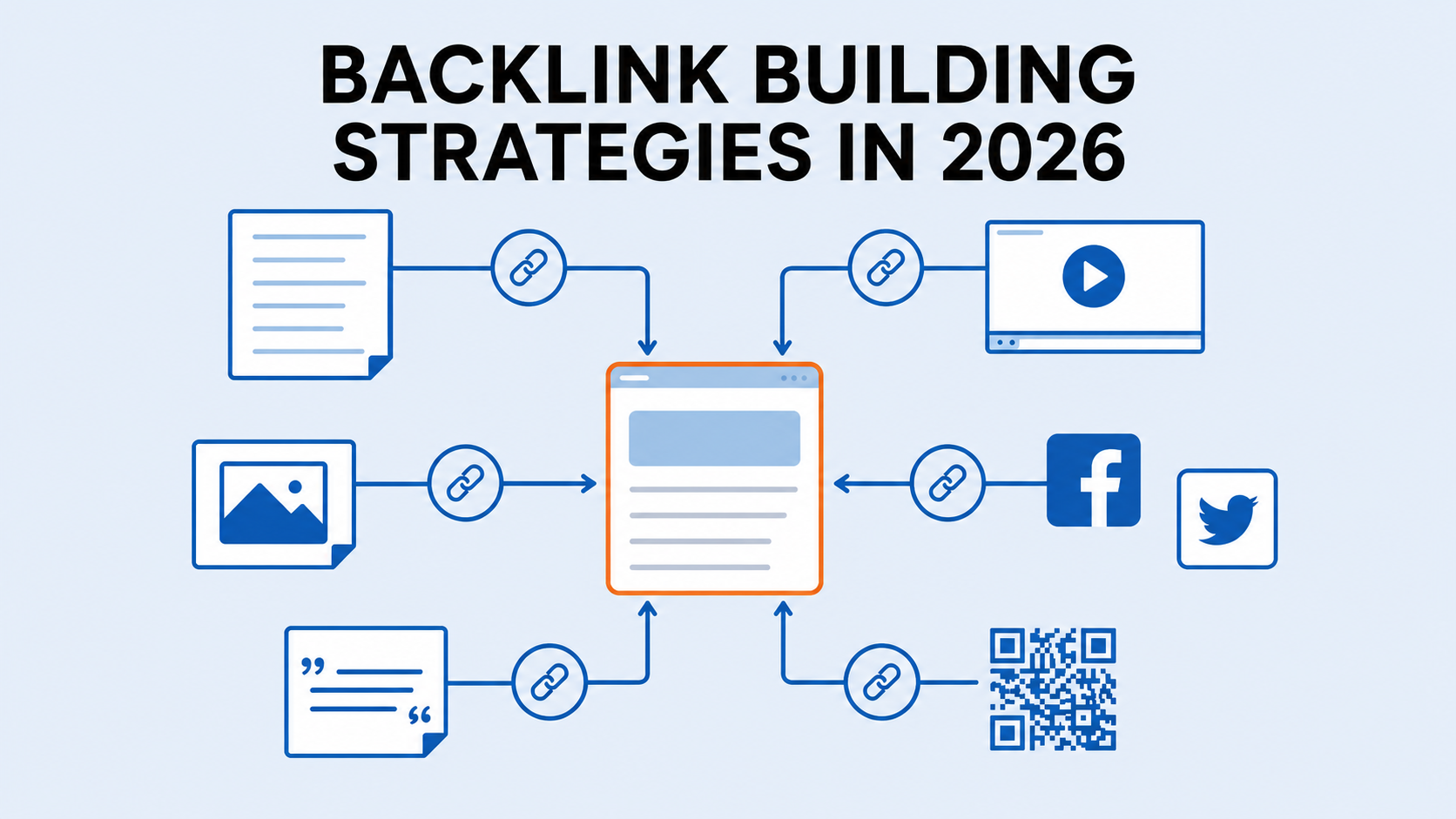
A backlink is a hyperlink from one website that points to a page on your website. When Site A publishes an article and links to a page on Site B, that is a backlink for Site B. Google treats this link as a vote of confidence — Site A is essentially telling Google that Site B’s content is worth referencing.
The more votes you collect from trustworthy, relevant websites, the more authority your site builds in Google’s eyes. This authority is a core part of how off-page SEO works, and it directly influences where you appear in search results.
Dofollow vs Nofollow Backlinks
Not all backlinks pass equal ranking power. There are two main types you need to understand.
Dofollow backlinks pass what SEOs call “link equity” or “link juice” directly to your site. These are the links that actively boost your Google rankings. Most editorial links — the ones you earn through content or outreach — are dofollow by default.
Nofollow backlinks include a rel=”nofollow” tag that instructs search engines not to pass ranking signals. Social media links, most forum links, and paid links typically carry this tag. However, nofollow links are not worthless — they drive referral traffic, build brand awareness, and Google has confirmed it uses them as a hint for ranking purposes.
Types of Backlinks
Not every backlink works the same way. Understanding the different types helps you build the right mix and avoid wasting time on links that do not move the needle. Here are the six main types of backlinks every beginner should know.
1. Natural Backlinks
Natural backlinks are earned without any outreach or effort on your part. Another website owner reads your content, finds it genuinely useful, and links to it on their own. These are the most valuable backlinks you can get because Google considers them the purest form of editorial endorsement. You earn natural backlinks by consistently publishing high-quality, original content that people want to reference.
2. Manual Backlinks (Outreach Links)
Manual backlinks are earned through deliberate outreach. You contact website owners, bloggers, or journalists and ask them to link to your content. Guest posting, broken link building, and resource page link building all fall into this category. These links require effort but give you direct control over where your links come from and what anchor text they use.
3. Editorial Backlinks
Editorial backlinks are placed by a writer or editor because your content genuinely deserves the reference. A journalist cites your original research. A blogger links to your guide as further reading. You did not ask for the link — they chose to include it on merit. Editorial backlinks from high-authority publications carry enormous ranking power and are the goal every serious SEO works toward.
4. Guest Post Backlinks
Guest post backlinks come from articles you write and publish on other websites. You contribute a full article to a blog in your niche, and in return you include one or two backlinks to your own site inside the content or author bio. These are manual links, but they are particularly effective because the entire article provides topical context for the link you are placing.
5. Self-Created Backlinks
Self-created backlinks are links you build yourself on external platforms without needing approval from a site owner. Forum signatures, blog comments, directory listings, and Web 2.0 profiles are common examples. These are the easiest links to create but also the weakest in ranking power. Most are nofollow. Used in moderation, they help diversify your link profile. Used in excess, they can appear manipulative to Google.
6. Toxic Backlinks
Toxic backlinks are low-quality or manipulative links that harm your rankings rather than help them. They typically come from link farms, private blog networks, hacked websites, or irrelevant directories that exist only to sell links. Google’s algorithm detects these patterns automatically. If you discover toxic backlinks pointing to your site, use Google’s Disavow Tool to tell Google to ignore them.
Why Backlinks Matter for Google Rankings
Backlinks are consistently ranked among the most important signals Google uses to evaluate pages, according to multiple industry studies and Google’s own public statements about PageRank. Google’s original PageRank algorithm was built on the idea that a page linked to by many trusted sources must itself be trustworthy. That foundational logic still drives the algorithm today.
Beyond rankings, backlinks accelerate how quickly Google discovers and indexes your new pages. When a high-authority site links to your post, Google’s crawlers follow that link and index your content faster than they would through a standard crawl.
Strong backlink profiles also increase your Domain Rating (DR) or Domain Authority (DA). These are third-party scores used by tools like Ahrefs and Moz to predict your overall ranking potential. A higher DR means every new page you publish starts with more ranking credibility right out of the gate.
Finally, AI platforms like ChatGPT, Google AI Overviews, and Perplexity learn which sources to cite in part by analyzing what authoritative websites already link to. Building quality backlinks today means earning citations from both Google and AI search tools.
What Makes a Backlink High Quality?
A high-quality backlink comes from a relevant, authoritative website where the link appears naturally within the content. Not all links are equal, and chasing the wrong ones can hurt your rankings instead of helping them.
Here are the five factors that separate a powerful backlink from a weak one:
Relevance — A link from a fitness blog pointing to your fitness equipment store is far more valuable than a link from a random tech website. Google weighs topical relevance heavily.
- Domain Authority / Domain Rating — Links from established sites with strong backlink profiles of their own carry more weight. Use Ahrefs’ free Backlink Checker or Moz’s Link Explorer to check DR/DA before targeting a site.
- Traffic Quality — A site that ranks organically and receives real visitors sends a stronger trust signal than a site with artificially inflated metrics.
- Anchor Text — The clickable text of your backlink gives Google context about your page. Use natural, descriptive anchor text like “link building guide” rather than forced keyword stuffing.
- Spam Score — Check the linking site’s Spam Score in Moz or Trust Flow in Majestic (a site quality metric from the backlink analysis tool Majestic). Links from spammy directories or penalized sites can trigger Google penalties against your own domain.
Best Backlink Building Strategies That Work Right Now
The most effective backlink building strategies combine relevance, genuine value, and relationship-based outreach. Here are the eight methods that consistently produce results — ranked from highest impact to most beginner-accessible.
1. Guest Posting
Guest posting means writing a quality article for another website in your niche, with an editorial backlink pointing back to your site. It remains one of the highest-ROI backlink building strategies available because you control the anchor text, the context, and the placement.
Start by searching Google for: your niche + “write for us” or your niche + “guest post guidelines”. Filter for sites with DR 30+ and genuine organic traffic. Send a short, personalised pitch — here is a template that gets replies:
Subject: Guest Post Idea for [Site Name]
Hi [Name], I’ve been reading [Site Name] for a while — your recent piece on [specific article] was genuinely useful. I’d love to contribute a piece on [your topic idea] for your audience. I can deliver a fully original, 1,200+ word article within 5 days. Would that interest you?
Keep the pitch short, specific, and focused on their audience — not your backlink.
2. Broken Link Building
Broken link building is one of the fastest ways to earn editorial backlinks from high-authority pages. Find a page in your niche that links to a dead URL, create (or point to existing) content that replaces the broken resource, then email the site owner to let them know.
Use the free Chrome extension Check My Links or Ahrefs’ Site Explorer to find broken outbound links on authoritative pages. Because you are solving their problem, reply rates are significantly higher than cold outreach. Here is a broken link outreach template you can send today:
Subject: Broken link on [Their Page Title]
Hi [Name], I was reading your article on [topic] and noticed one of the links is no longer working — the link to [describe the dead resource] now returns a 404 error.
I actually have a piece on the same topic that covers [brief description]. It might be a useful replacement if you are updating the page.
Either way, thought you would want to know about the broken link.
[Your name]
Keep the tone helpful, not salesy. You are doing them a favour first — the backlink request is secondary.
3. Skyscraper Technique
The Skyscraper Technique, popularised by Brian Dean at Backlinko, works like this: find a piece of content in your niche with many backlinks, create a clearly better version, then reach out to everyone linking to the original. Better means more current, more detailed, better designed, or more comprehensive.
Use Ahrefs Content Explorer or SEMrush to find link-rich content in your niche. If you do not have a paid tool yet, search Google for your target topic and use the free Ahrefs Backlink Checker to inspect the top-ranking pages manually. Sort by referring domains, pick a target, outperform it, and contact those linkers.
4. Content-Based Backlinks (Linkable Assets)
Creating content that people naturally want to reference is the most scalable long-term backlink strategy. These “linkable assets” include original research, statistics roundups, free tools, comprehensive how-to guides, and visual explainers like infographics.
For example, if you publish original survey data on a topic in your niche, bloggers and journalists writing about that topic will cite your statistics — giving you passive backlinks without ongoing outreach. A well-designed infographic on a complex topic earns the same result.
5. Resource Page Link Building
Resource pages are curated lists that link to the best content on a given topic — for example, “Top SEO Resources for Beginners.” Find these pages by searching: your topic + “useful resources” or your topic + inurl:resources. If your content genuinely fits the list, send a brief, polite email suggesting it as an addition.
6. Niche Edits (Link Insertions)
A niche edit means reaching out to a site owner and asking them to add your link to an existing, already-indexed article. Because the page already has authority and is indexed, the link can pass ranking signals quickly. Keep outreach honest — offer your link because it genuinely adds value to their existing content, not just because you want the backlink.
7. Profile and Platform Backlinks
Creating profiles on high-authority platforms is a fast way for beginners to build an initial backlink foundation. Relevant platforms include LinkedIn, GitHub, Crunchbase, About.me, and niche-specific directories. While these are mostly nofollow, they establish brand entity signals that support your overall authority.
8. Web 2.0 Properties
Publishing content on Web 2.0 platforms — Blogger, WordPress.com, Medium — and linking back to your site creates additional branded signals. Used carefully, these supplement your link profile. Do not rely on them as your primary strategy; use them to diversify your link sources and drive referral traffic.
Speaking of free sources — the next section maps out every platform where you can build backlinks today without spending a penny.
Free Backlink Sources for Beginners
You do not need a paid tool or a budget to start building backlinks today. These platforms let you publish content or create profiles that link back to your site — all for free.
|
Platform
|
Backlink Type
|
Best Use
|
|---|---|---|
|
Dofollow
|
Republish or write original articles
|
|
|
Nofollow
|
Thought leadership and brand signal
|
|
|
Nofollow
|
Answer questions, link to relevant content
|
|
|
Nofollow
|
Participate in niche communities genuinely
|
|
|
Nofollow
|
Infographics and visual content
|
|
|
Dofollow
|
Web 2.0 content publication
|
Common Backlink Mistakes to Avoid
The fastest way to undo months of link building work is to make one of these mistakes. Google’s algorithm includes built-in link spam detection that runs continuously, targeting manipulative link building. A manual penalty from Google’s spam team can drop your rankings overnight and takes weeks or months to recover from.
- Buying cheap backlinks. Sites selling 100 backlinks for $10 deliver links from private blog networks (PBNs) — fake networks of low-quality websites created solely to sell links — or spammy directories that Google has already flagged. The short-term boost disappears quickly, and recovery from a manual penalty takes months.
- Over-optimized anchor text. If 80% of your backlinks use the exact phrase “best SEO tools,” Google reads that as manipulation. Vary your anchor text: use your brand name, the URL itself, partial match phrases, and generic terms like “read more” or “this guide.”
- Irrelevant backlinks. A travel website linking to your accounting software page sends a confusing relevance signal to Google. Prioritize topically relevant sources, even if their DA is lower than an irrelevant high-DA site.
- Ignoring toxic backlinks. Regularly audit your backlink profile using Google Search Console or Ahrefs. If you discover spammy links pointing to your site (from link farms or hacked sites), use Google’s Disavow Tool to neutralize them.
- No link tracking. Building backlinks without measuring results is like running a campaign without checking conversions. Track every link you earn so you can double down on what is working.
How to Track Your Backlinks
Tracking your backlinks is not optional — it is how you know whether your backlink building strategy is working. These four tools give you full visibility into your backlink profile, from new links earned to lost links and toxic sources.
Google Search Console (Free):
Go to Links > External Links to see which sites link to you most and which pages receive the most backlinks. This is your baseline, zero-cost starting point.
Ahrefs (paid, free limited use):
The most comprehensive backlink database available. Use Site Explorer to track new backlinks, lost links, referring domains, and DR changes over time.
SEMrush (Paid, free trial):
The Backlink Analytics tool shows your full link profile, toxic link score, and a comparison against up to four competitors.
Uberstugges (Freemium):
A budget-friendly alternative to Ahrefs with backlink tracking, DR scores, and basic anchor text reports. Good starting point for beginners before upgrading to paid tools.
Set a recurring reminder — weekly or monthly — to check for new links earned, lost links to reclaim, and any toxic links to disavow.
Conclusion
Building a strong backlink profile is the single most powerful off-page action you can take to improve your Google rankings. Every high-quality link you earn tells Google — and AI platforms like Perplexity and ChatGPT — that your content is worth surfacing to real users. The backlink building strategies in this guide give you a complete roadmap: from understanding what makes a backlink valuable, to earning your first editorial links, to tracking your results over time.
Start with two or three strategies — guest posting, free platform backlinks, and broken link building are the strongest combination for beginners. Focus on quality over quantity at every step. One link from a DR 60 site in your niche will outperform fifty links from random directories.
Start with the guest post pitch template in this guide, send your first outreach email today, and revisit this page as your backlink profile grows. Consistency is what separates websites that rank from websites that stay invisible — pick your first strategy and take action now.
Post author
Najash is a passionate blogger and SEO Specialist based in Kerala, dedicated to sharing meaningful ideas and data-driven insights. With deep expertise in search engine optimization, Najash helps brands and businesses grow their online presence through smart strategies. Follow along for expert tips and practical advice that make every read worthwhile.
Related Article
- All Posts
- SEO